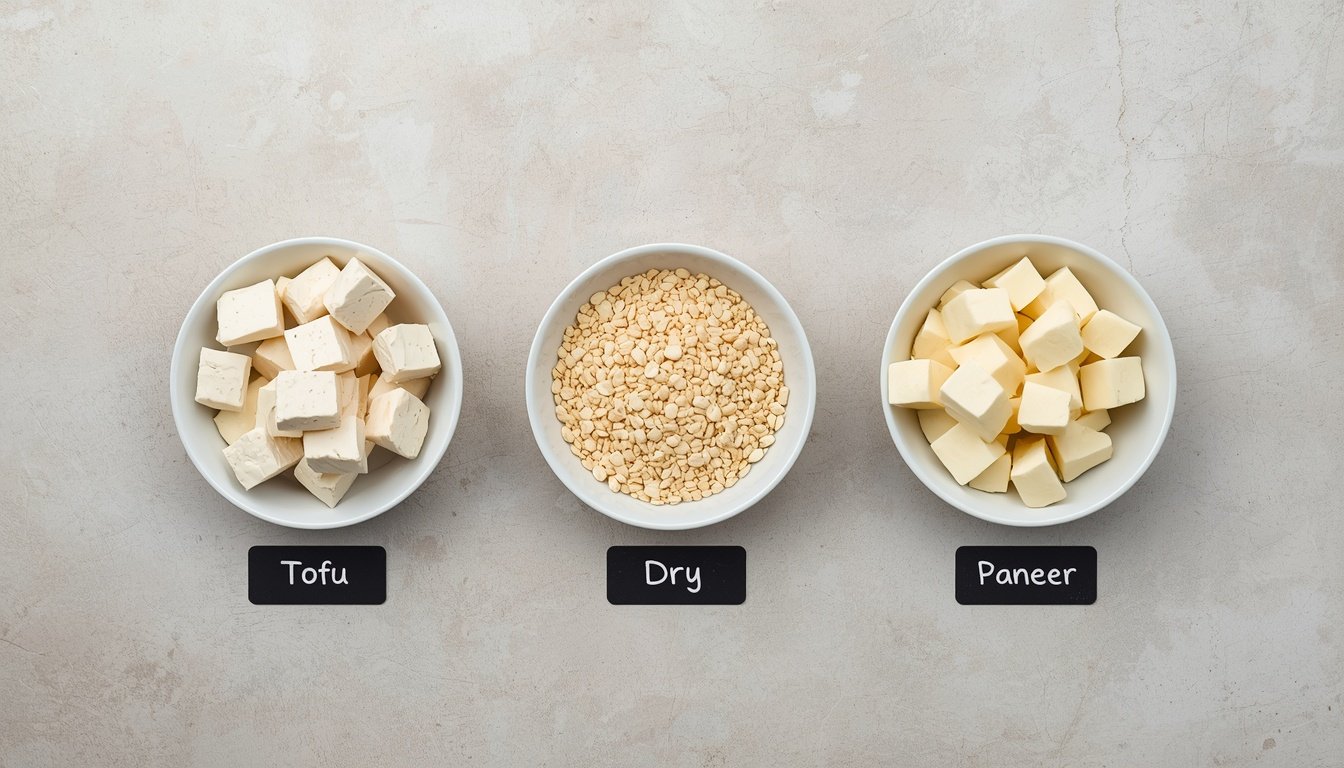
Kitchen teams sourcing vegetarian protein at scale usually choose between three options: fresh paneer, dried soy chunks, and fresh tofu. Each behaves differently in storage, prep and on the plate. This comparison is built for procurement and kitchen decisions, not home cooking.
Cost, Shelf Life and Prep Time Compared
| Factor | Fresh Tofu | Soy Chunks (Dry) | Paneer |
|---|---|---|---|
| Cost per kg protein | Low | Lowest | Higher |
| Storage | Refrigerated | Ambient, long shelf life | Refrigerated |
| Prep before cooking | Press only | Soak and rehydrate | None |
| Texture | Smooth, dense | Chewy, fibrous | Soft, creamy |
| Best suited for | Curries, tikka, grills | Dry sabzi, bulk fillers | Curries, tikka, sweets |
| Saturated fat | Low | Very low | High |
When Soy Chunks Make More Sense
Soy chunks are dried and shelf-stable, which makes them useful for kitchens without reliable cold storage, or for high-volume dry preparations like a bulk sabzi where a fibrous, meat-like chew is preferred. Their main drawback is a rehydration step that adds prep time and a texture that does not suit gravies or grilled dishes as well as tofu.
When Fresh Tofu Makes More Sense
Tofu is the closer match for dishes currently built around paneer, since it needs no rehydration and takes on marinades and gravies with a similar mouthfeel. For a hotel or restaurant adding a plant-based tikka, curry or grill item, tofu generally requires the least recipe adjustment from an existing paneer dish.
A Simple Rule of Thumb
Use soy chunks where shelf-stability matters more than texture, such as remote catering with limited refrigeration. Use fresh tofu where the dish needs to closely match an existing paneer preparation on the menu. Use paneer only where the dairy flavour itself is the point of the dish.
Frequently Asked Questions
Which is better for a commercial kitchen, tofu or soy chunks?
It depends on the dish. Soy chunks (nutri-nela) are dried, need rehydration, and are best for dry sabzis or bulk fillers with a long shelf life. Fresh tofu needs refrigeration but offers a smoother texture suited to curries, tikka and grilled preparations, and requires no rehydration step.
Is fresh tofu more expensive than paneer for a restaurant?
No, fresh tofu is generally less expensive per kilogram than paneer, since soy is a cheaper raw material than milk fat, making it a lower-cost option for kitchens managing food cost percentages on plant-based menu items.