India carries one of the world's largest diabetic populations, and food choices are often the first thing people re-examine after a diagnosis. Tofu comes up frequently in that search because it looks like paneer but comes from soy. This guide explains, in plain terms, how tofu behaves in the body and where it fits into a diabetes-conscious diet.
What Is Tofu's Glycemic Index?
Tofu has a glycemic index of around 15 to 20, which is considered very low. Foods below 55 are classified as low-GI, meaning they cause a slow, gentle rise in blood sugar rather than a sharp spike. This is largely because tofu contains very little carbohydrate, with most of its calories coming from protein and fat instead.
Does Tofu Raise Blood Sugar?
On its own, no. A 100 gram serving of tofu typically contains only 1.5 to 3 grams of carbohydrate, which is far too little to meaningfully affect blood glucose. The protein and fat in tofu can also help slow the digestion of any carbohydrate-rich foods eaten alongside it, such as rice or roti, which is a useful property for anyone managing blood sugar.
Why Doctors and Dietitians Often Recommend It
Beyond its low-GI profile, tofu offers protein without the saturated fat load of red meat or full-fat paneer, which matters because diabetics are also at higher risk of heart disease. Soy protein has additionally been studied for modest cholesterol-lowering effects, making tofu a food that supports more than one health goal at once.
A Simple Diabetic-Friendly Tofu Meal
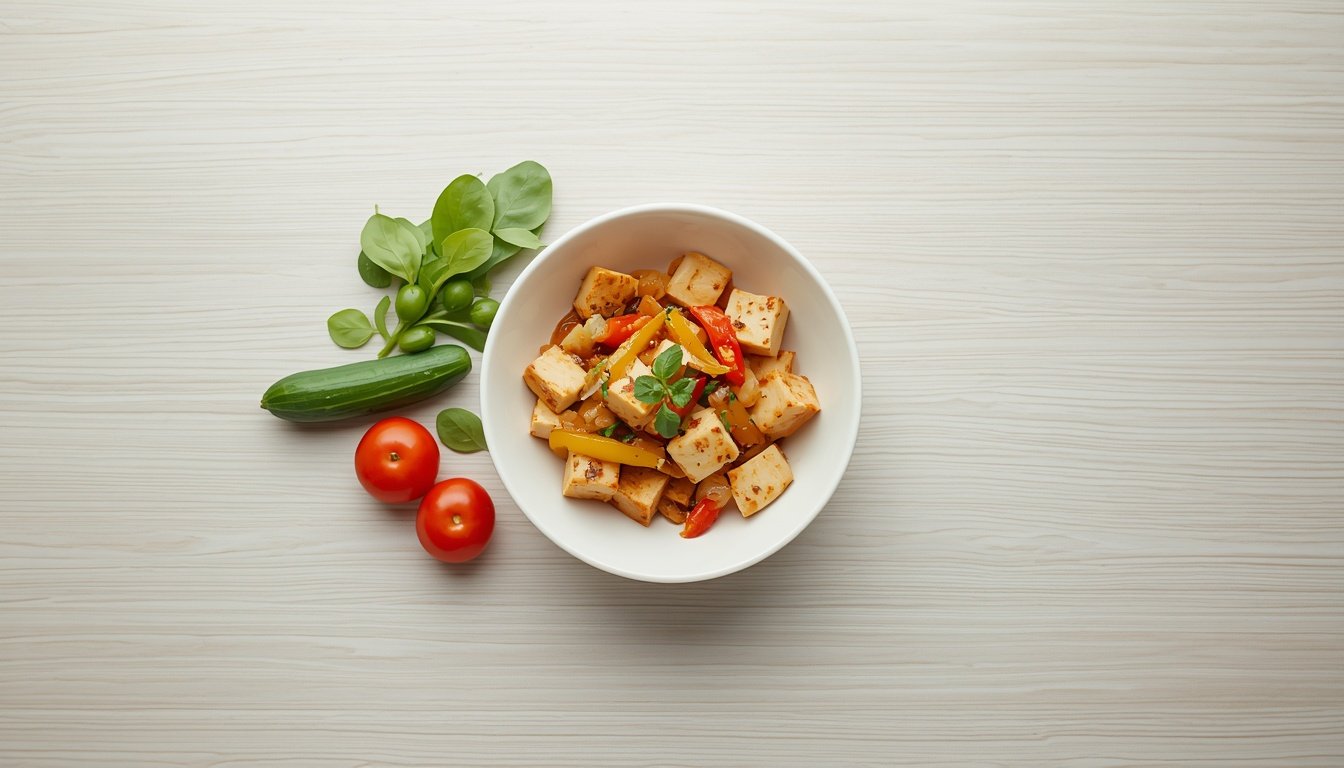
Stir-fried tofu with bell peppers, onion and a light tempering of mustard seeds, served with a small portion of brown rice or one roti, and a side of cucumber-tomato salad. This keeps the meal high in protein and fibre while naturally low in refined carbohydrate.
How Should Tofu Be Cooked for a Diabetic Diet?
Grilling, steaming, light stir-frying or curry-cooking with minimal oil are the best methods. Deep-fried tofu, or tofu cooked in heavy, sugar-laden gravies, can undo its benefits by adding excess fat and hidden sugar. Pairing tofu with fibre-rich vegetables and whole grains, rather than refined flour dishes, gives the steadiest blood sugar response.
Frequently Asked Questions
Is tofu safe for diabetics?
Yes, tofu is generally considered safe and beneficial for diabetics. It has a low glycemic index, is low in carbohydrates, and its protein and fat content slow down the absorption of any accompanying carbohydrates, helping to keep blood sugar more stable after meals.
Does tofu raise blood sugar levels?
No, tofu on its own has minimal impact on blood sugar because it contains very few carbohydrates. Most of its calories come from protein and fat, neither of which causes the rapid blood glucose spikes associated with high-carbohydrate foods.
How should diabetics include tofu in their diet?
Diabetics can include 100 to 150 grams of tofu in a meal, cooked with vegetables and light oil rather than deep-fried or paired with refined-flour dishes, and combined with fibre-rich vegetables or whole grains to further slow glucose absorption.
This article is for general information only and does not replace medical advice. Diabetics should consult their doctor or dietitian before making significant dietary changes.