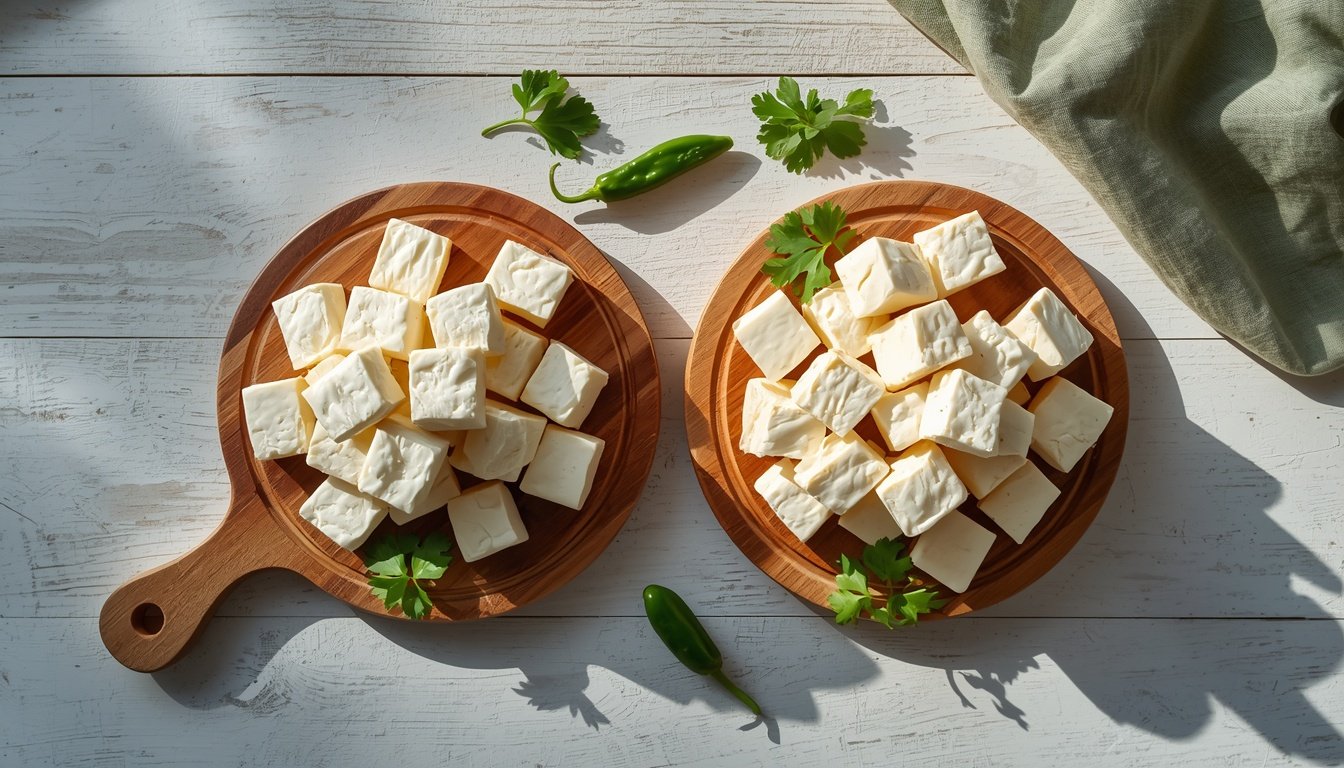
Tofu and paneer both appear on Indian dinner tables as soft, protein-rich blocks that soak up whatever spices they are cooked with. Because they look and behave alike in a curry, many families assume they are nutritionally interchangeable. They are not. This article compares the two directly, using their actual nutrition profiles, so you can decide which one belongs on your plate more often.
What Is the Real Difference Between Tofu and Paneer?
Paneer is fresh cheese made by curdling dairy milk with an acid such as lemon juice or vinegar, then pressing the curds into a block. Tofu is made the same way in principle, but the starting liquid is soy milk instead of cow's milk. That single difference in raw material is what separates a plant-based product from a dairy product, and it is the reason their nutrition profiles diverge.
Tofu vs Paneer: Nutrition Compared (per 100 grams)
| Nutrient | Firm Tofu | Paneer |
|---|---|---|
| Calories | 140-150 kcal | 260-290 kcal |
| Protein | 8-12 g | 18-20 g |
| Total Fat | 8-9 g | 20-22 g |
| Saturated Fat | 1-1.5 g | 13-14 g |
| Cholesterol | 0 mg | 60-70 mg |
| Calcium | 200-350 mg* | 200-480 mg |
| Lactose | None | Present |
*Calcium in tofu depends on whether it is set with a calcium coagulant; check the pack.
Is Tofu Healthier Than Paneer?
For most healthy adults, tofu is the lighter choice. It carries a fraction of the saturated fat found in paneer, has zero cholesterol, and delivers more protein per calorie. This makes it a practical fit for anyone watching heart health, managing weight, or eating more plant-based meals during the week. Paneer is not unhealthy, but its higher saturated fat content means it is better suited to occasional indulgence than daily consumption for most adults.
Who Should Prefer Tofu
Adults managing cholesterol or weight, people who are lactose intolerant, anyone reducing saturated fat intake on medical advice, and households moving toward more plant-based meals without giving up the texture and versatility of paneer-style cooking.
Does Tofu Taste Different From Paneer?
On its own, tofu is milder and slightly nuttier than paneer, which has a faint tang from the dairy curdling process. In an Indian gravy, marinade or tikka masala, both absorb the surrounding spices so completely that the difference in raw taste becomes minor. The bigger difference is texture: firm tofu holds a slightly denser bite, while paneer is softer and creamier.
Can You Substitute Tofu for Paneer in Everyday Recipes?
Yes, directly. Firm tofu can replace paneer cube for cube in tikka, kadai, bhurji, palak, matar and stir-fry preparations. Press the tofu for 10-15 minutes before cooking to remove excess water, then marinate or saute it exactly as you would paneer. No change to the recipe's spice quantities is needed.
Which One Is Better Value for a Family?
Tofu generally costs less per 100 grams of protein than paneer, because soybeans are a cheaper raw material than milk fat. For families cooking protein-rich meals several times a week, switching some paneer meals to tofu can lower the weekly grocery bill without reducing the protein on the table.
Frequently Asked Questions
Is tofu healthier than paneer?
For most adults, tofu is the lighter choice because it is lower in saturated fat and cholesterol-free, while paneer offers more calcium per serving from milk fat. The better option depends on your goals: weight management and heart health generally favour tofu, while growing children and those needing extra calcium may benefit from a mix of both.
Does tofu have as much protein as paneer?
Yes. Firm tofu provides roughly 8 to 12 grams of protein per 100 grams, which is comparable to paneer's 18 to 20 grams per 100 grams on a per-calorie basis, since tofu carries far fewer calories for the protein it delivers.
Can tofu replace paneer in Indian cooking?
Yes. Firm tofu holds its shape well in curries, tikka, bhurji and stir-fries, and absorbs Indian spices easily, making it a direct substitute for paneer in most home recipes.